.jpeg "Bullet Bros")
.jpeg "Poor Bunny")
.jpeg "Flappy Bird")
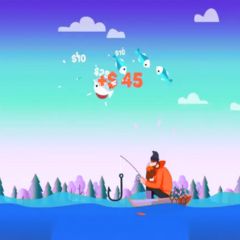
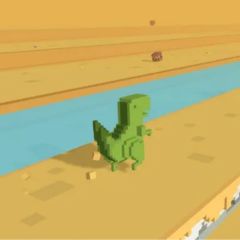

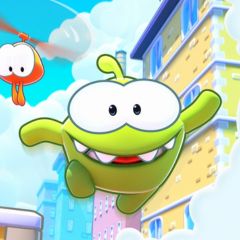
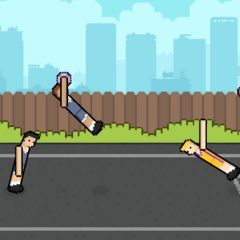
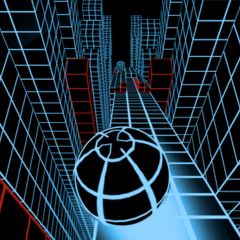
.jpeg "Pizza Tower")
.jpeg "Space Waves")
.jpeg "Block Blast")
.jpeg "Slice Master")

.jpeg "Cluster Rush")
Space Waves
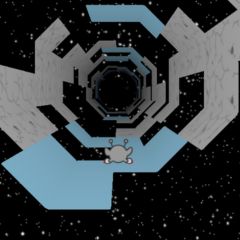
Space Waves is a fast-paced game with constantly moving light waves. Modern graphics combined with music make it extremely vibrant and attractive.
Principle of thrust control
The player will control the arrow to continuously move forward without any manipulation.
- When the player holds down the mouse key or touches the screen, the object will receive a thrust and fly up in a slightly curved trajectory.
- You just need to release the button to make the wave land as well as reduce the thrust and fall freely due to gravity.
Level Structure in Space Waves
- Space Waves has a total of 33 pre-designed levels.
- The special thing is that the player can choose any level to start or challenge, without having to complete the previous level. This allows the player to focus on the levels they love or want to practice.
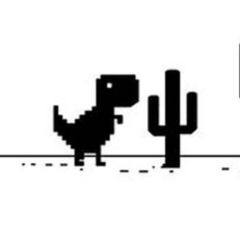
- The goal of the game is the same as the Dinosaur Game, which is to overcome all obstacles on the way, try to survive from the starting point to the end point of the level without colliding.
Difficulty Classification Structure in Space Waves
Labeling System and Difficulty Options
- Each level in the total of 33 stages is labeled with an intuitive face icon to clearly indicate the level of challenge.
- Players can choose any level they want to play right away without having to play in order from easy to hard. If you have mastered some speed games like the famous Dinosaur Game, you can skip the easy levels for beginners to get used to this fast-paced gameplay.
Difficulty Enhancers
Difficulty is controlled by simultaneously adjusting the following four main factors:
- The horizontal movement speed of the waves and the environment increases gradually with each level.
- High speed forces players to have instant reflexes and significantly reduces information processing time. A small mistake in timing can easily lead to an immediate collision.
- In the easy level, players have 1-2 seconds to react; in the hard level, this time can be reduced to less than 0.5 seconds.
The Complexity of Moving Objects
In early levels, obstacles are mostly static (fixed walls, spikes). As the difficulty increases, they begin to move in complex patterns:
- Rotation: The blocks rotate.
- Sliding: The barriers slide horizontally or vertically on a beat.
- Oscillation: The walls or ceilings contract and expand in cycles.
Forcing the player to learn to time the movement of the surrounding objects rather than just focusing on their own trajectory.
.jpeg "Sprunki")

.jpeg "Crossy Road")